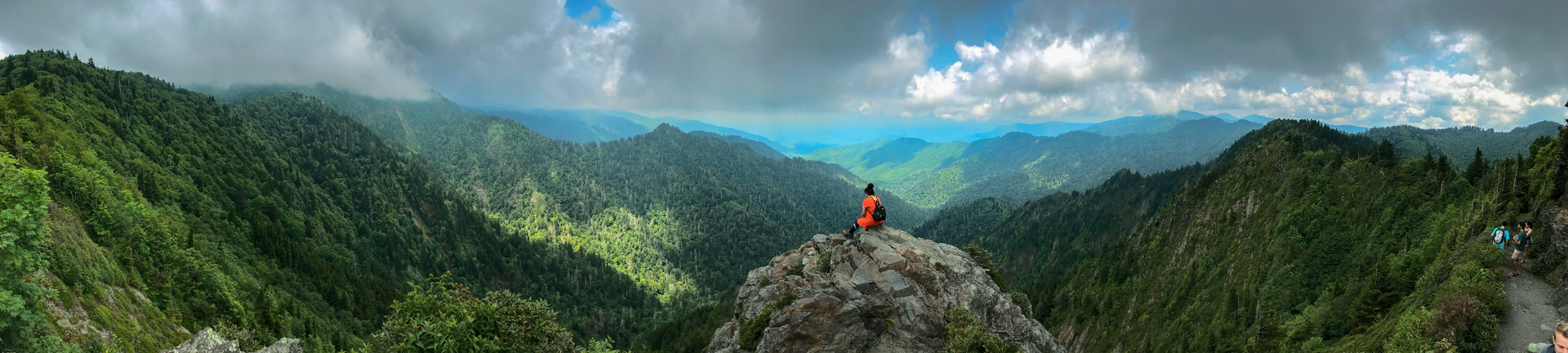


What’s the geological history behind the great Smoky Mountains?
The Great Smoky Mountains are known for their mist-covered peaks, lush forests, and incredible biodiversity, but their story began long before the first hiking trails or scenic overlooks appeared. In fact, the mountains are among the oldest on Earth, with a geological history spanning more than a billion years. Every ridge, valley, and rock formation tells the story of ancient oceans, shifting continents, and millions of years of erosion.
Here are some important facts about the Smoky Mountains.
The Smokies Has Ancient Beginnings
The Geological History of the Smoky Mountains
Ancient Beginnings
The foundation of the Smoky Mountains formed over one billion years ago when molten rock cooled deep beneath the Earth's surface. Over time, layers of sand, mud, and gravel collected in an ancient inland sea that once covered much of the region. As these sediments hardened, they became the sandstone, shale, and slate that still make up much of the mountains today.
These ancient rocks provide a glimpse into a world that existed hundreds of millions of years before dinosaurs roamed the planet.
The Formation of the Mountains
Around 300 million years ago, two massive tectonic plates collided during the formation of the supercontinent Pangaea. The tremendous pressure folded and pushed layers of rock upward, creating a mountain range that rivaled today's Himalayas in height.
This mountain-building event, known as the Appalachian orogeny, shaped much of the eastern United States. The Smoky Mountains became one of the most prominent sections of the Appalachian Mountains, with towering peaks that dominated the landscape.
Millions of Years of Change
The dramatic peaks seen today are only a fraction of their original height. Wind, rain, rivers, freezing temperatures, and changing climates slowly wore away the mountains over millions of years. This gradual erosion carved deep valleys, rounded ridges, and the distinctive rolling landscape that defines the Smokies today.
Streams carried sediment away from the mountains, helping create fertile valleys while exposing some of the oldest rocks found in North America.
Why the Mountains Look Smoky
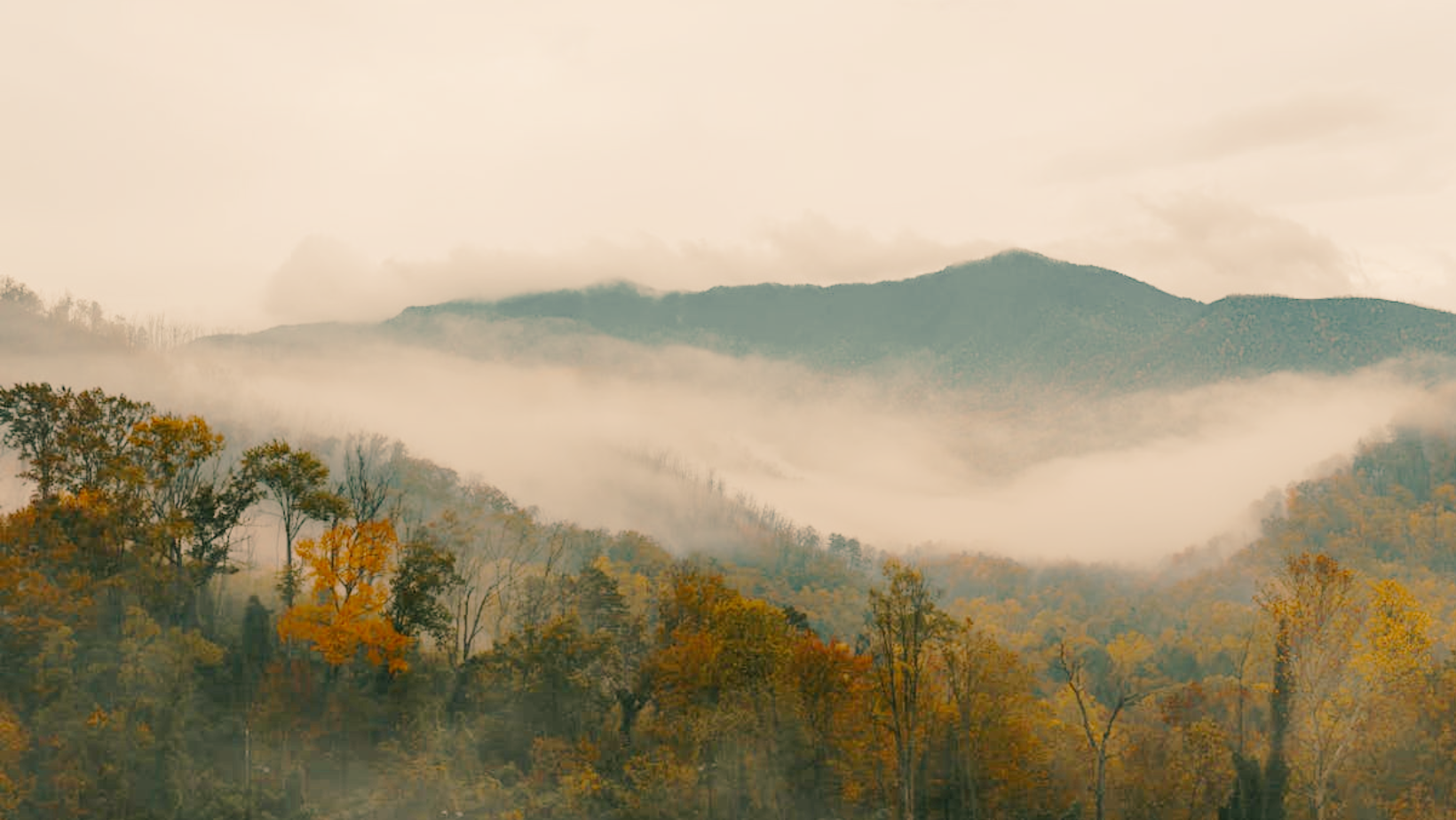
The blue-gray haze that gives the Smoky Mountains their famous name has a natural explanation. Trees release tiny organic compounds into the air, and these particles scatter sunlight, creating the soft blue appearance seen across the mountain ranges.
Morning humidity and rising mist often enhance the effect, producing the breathtaking views that attract photographers and visitors throughout the year.
A Landscape Rich in Diversity
The region's long geological history helped create an extraordinary variety of habitats. Changes in elevation, soil types, and climate support thousands of plant and animal species, making the Smokies one of the most biologically diverse areas in North America.
Old-growth forests, rocky outcrops, mountain streams, and wildflower-filled valleys all exist because of the geological processes that shaped the landscape over millions of years.

Discover the Smoky Mountain Today
Discovering the Smokies Today
Visitors can see evidence of the mountains' ancient past throughout the region. Scenic drives reveal layers of exposed rock, while hiking trails pass cliffs, waterfalls, and ridgelines formed through countless years of natural forces. Popular overlooks provide sweeping views that showcase the rolling peaks created by millions of years of erosion.
Learning about the geological history of the Smoky Mountains adds another layer of appreciation to every visit. Beyond their natural beauty lies an incredible story of shifting continents, ancient seas, and the powerful forces that shaped one of America's most treasured mountain landscapes.
Every trail, overlook, and mountain vista offers a chance to experience a landscape that has been evolving for over a billion years. Visit Smoky Mountains now and stay in a vacation rental there to get the most out of your stay.